Not long ago, a 10- or 15-kilowatt rack was considered high density in many facilities. Power distribution, cooling, and monitoring systems were designed around that operating model. Loads were lower. Changes were generally more predictable. There was more room between normal operation and the practical limits of the infrastructure.
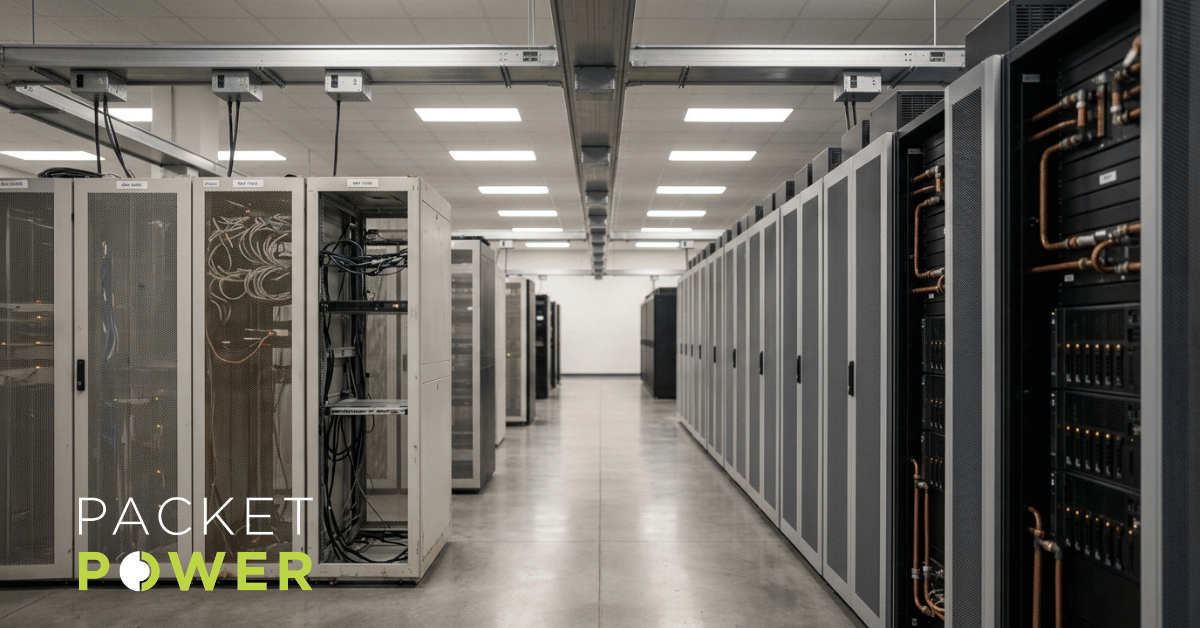
That operating model is changing quickly. AI deployments are pushing 60, 80, and more than 100 kilowatts (KW) into a single rack, with even higher-density designs already being discussed. A rack can now draw what an entire row once consumed.
Most of the attention has understandably gone to cooling. At these densities, air cooling alone often cannot remove enough heat, which is why liquid cooling has become such an important part of the conversation.
But high density is not only a cooling problem.
It is also a measurement problem.
The rack got denser. In many facilities, the monitoring did not.
• • •
I think about this the same way I used to think about equipment utilization in a manufacturing plant. When a machine is operating comfortably below its limits, a rough reading may be enough. You know approximately what it is doing, there is plenty of operating margin, and small variations are unlikely to create an immediate problem.
The closer you push that machine to its limits, the less useful the rough reading becomes. At that point, an average can hide the exact information you need. You need to know where the load is concentrated, when it peaks, how long the peak lasts, and whether one component is behaving differently from the rest.
High-density data centers are no different. A facility may know the total load on a PDU, a room, or even a rack. That does not always tell the operator what is happening on the individual circuits, phases, or redundant feeds underneath it.
At lower density, that gap may have been manageable. At 80 or 100 kilowatts per rack, it starts to matter a lot more.
The closer you operate to the limit, the less useful an average becomes.
That is really the reason high-density power monitoring is becoming the new baseline. It is not because the industry held a meeting and agreed on it. It is because the questions operators need to answer have changed.
• • •
Suppose you want to add another high-density rack. It is not enough to know that the building has another megawatt available somewhere. You need to know whether the capacity exists in the right room, on the right PDU, through the right panel or busway segment, and on both sides of the redundant power path. A data center can have capacity available in total and still be constrained exactly where the next workload needs to go. That happens all the time.
The real questions are more specific:
- How is the load split between the A and B feeds?
- Are the phases balanced?
- Are certain circuits carrying more than expected?
- What do short-duration peaks look like?
- How much capacity has actually been used, and how much has merely been allocated?
- Can you add another load and still preserve the redundancy and operating margin you need?
Those are not questions a facility-wide total can answer. You have to measure the load more closely.
• • •
I also want to be clear about what monitoring does and does not do.
Monitoring does not create electricity. It does not increase the breaker rating. It does not eliminate the need for redundancy. It does not fix a cooling constraint or replace engineering judgment.
What it does is tell you what is actually happening. That sounds simple, but it matters.
Most operators are dealing with three different versions of capacity:
- There is the rated capacity of the equipment.
- There is the capacity they need to hold back for failover, maintenance, cooling, and customer commitments.
- There is the extra cushion they carry because they do not have enough information to operate any closer.
The first two are real and necessary. The third is where visibility can make a difference.
Without enough data, the safest answer is usually “no”. No, we cannot add another rack. No, we cannot push that section any harder. No, we cannot count on that capacity being available.
I understand that answer. But when every unknown is treated as unavailable capacity, facilities inevitably run more conservatively than they need to. The cost of being wrong is extraordinarily high.
Better monitoring does not remove the need for a safety margin. It helps operators understand what the right safety margin actually is. That is a big difference.
• • •
It also helps explain why this matters so much right now. New data centers take years to build. Utility power is constrained in many markets. Electrical equipment can have long lead times. So, even when a company has the money and the demand, it may not be able to add capacity quickly. That means the capacity already inside the building is becoming more valuable.
Operators need to know how much of it is actually usable, where it is located, and what is preventing them from using more of it. Sometimes the constraint is real. Sometimes it is cooling. Sometimes it is redundancy. Sometimes it is a panel, a busway segment, or one side of the power chain.
And sometimes the constraint is simply that nobody has enough information to say yes with confidence.
You cannot tell the difference without measuring it.
• • •
More detailed monitoring also gives operators a better chance of seeing when something changes. A power monitor is not going to diagnose every equipment problem. But it can show that a load is no longer behaving the way it did before. Maybe one circuit starts carrying more than comparable circuits, or one phase begins to drift out of balance. The baseline load may change, or short peaks may start showing up where they did not before.
None of those things automatically means a failure is coming. But they are signals.
And the more compute you concentrate into a single rack, the more important those signals become. At 10 kilowatts, a small anomaly might get buried inside a comfortable operating buffer. At 100 kilowatts, there is more equipment, more compute, and more economic value sitting behind the same electrical path.
The signal matters more because the load matters more.
• • •
The next question we often encounter from operators is how to get that visibility without turning monitoring into a massive infrastructure project, which is especially important in existing data centers.
A new facility can design monitoring into the electrical system from the beginning. But an operating facility has a different problem. It already has customers, workloads, and equipment in place. It generally cannot tolerate unnecessary downtime or a major communications-wiring project.
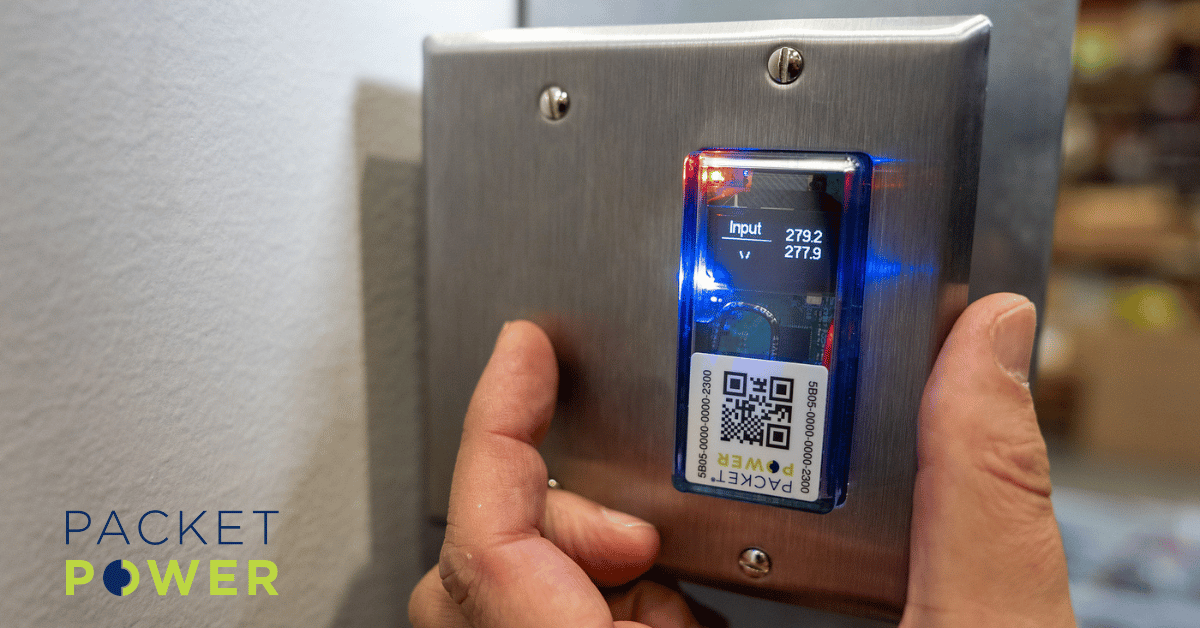
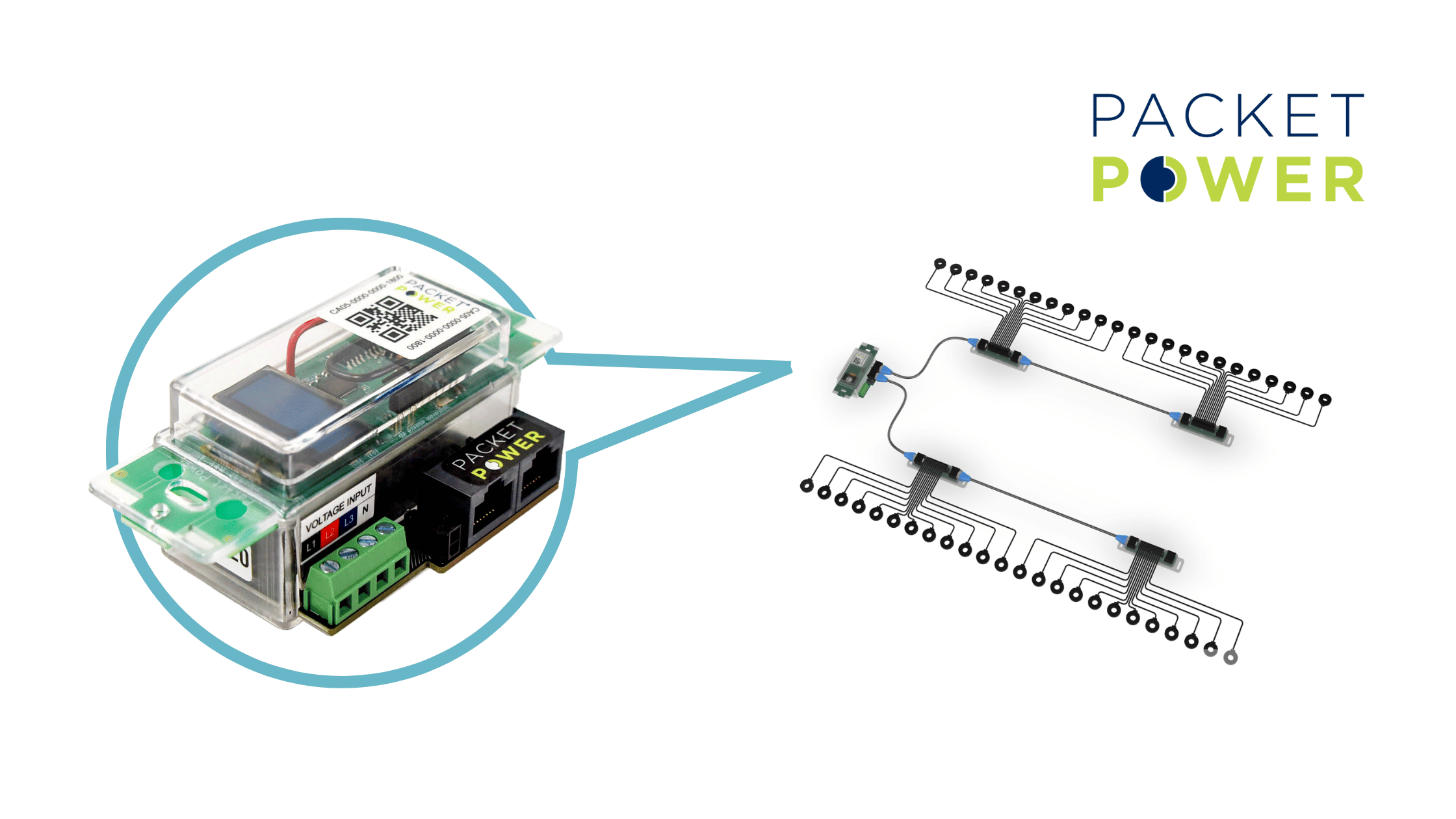
That is one reason wireless monitoring has become much more relevant. A self-forming radio mesh can operate separately from the customer’s existing network and carry data from the monitoring points back to a gateway. That makes it possible to add visibility without running communications cable to every circuit or panel. The gateway can then deliver the data into the systems the operator already uses, whether that is a DCIM platform, BMS, or another monitoring application.
The point is not to create one more dashboard. The point is to get better information into the decisions the facility is already making.
• • •
I don't expect this shift to happen with a lot of fanfare. There probably will not be a single day when everyone declares that circuit-level monitoring is now mandatory.
It will happen more quietly, some of which we are already seeing in the market:
- Engineering specifications are starting to require more visibility closer to the load.
- Operators have started asking to see the actual behavior of circuits and redundant feeds before approving new deployments.
- Capacity planning is becoming less of a periodic spreadsheet exercise and more of a continuously measured process.
Eventually, aggregate monitoring will feel incomplete in a high-density environment, just as having no rack-level visibility feels incomplete today.
Rack density is not going back down. More power and more economic value are going into a smaller footprint. The margin for operating from estimates is getting smaller along with it.
You cannot manage 100-kilowatt racks with 10-kilowatt-era visibility.
Monitoring has to catch up.
The Bigger Picture is a monthly series from Packet Power CEO Nate Nomeland exploring the operational and strategic challenges facing facility leaders.




 The Bigger Picture with Nate Nomeland
 Packet Power Team : June 2026
 The Bigger Picture with Nate Nomeland