Ask any data center operator what they wish they had more of, and the answer is almost always space. As rack densities climb and power demands grow, every square foot needs to earn its keep. When your monitoring hardware starts competing with your IT equipment for room, something has to give.
That pressure is driving a meaningful shift in how facilities approach power monitoring. Large panel meters and wall-mounted metering enclosures are giving way to small form factor monitoring devices that fit where you actually need them.
Why Traditional Monitoring Hardware No Longer Fits
Traditional power monitoring architectures were designed around centralized infrastructure: panel-mounted meters, hardwired sensor networks, and dedicated gateways or collection hardware feeding data back to a central system. When floor space was plentiful and rack densities were lower, the added cabling, installation effort, and hardware footprint were an acceptable tradeoff.
That is no longer the reality for most facilities. Operators are trying to squeeze every possible kilowatt out of their existing footprint, and that wall-mounted metering cabinet or half-rack of monitoring gear is taking up space that could house revenue-generating equipment.
The cabling infrastructure behind it only makes things worse, turning moves and expansions into drawn-out projects. If adding monitoring to a new row means scheduling an electrician and pulling cable, the project often gets pushed to the back of the queue.
How Small Form Factor Monitors Solve the Space Problem
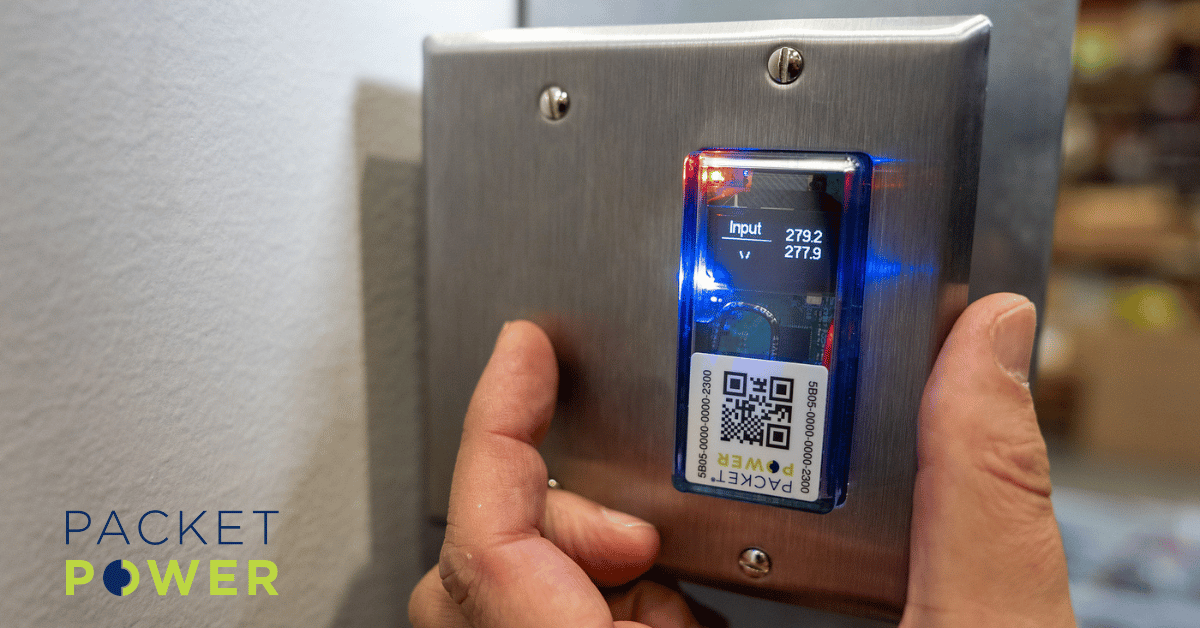
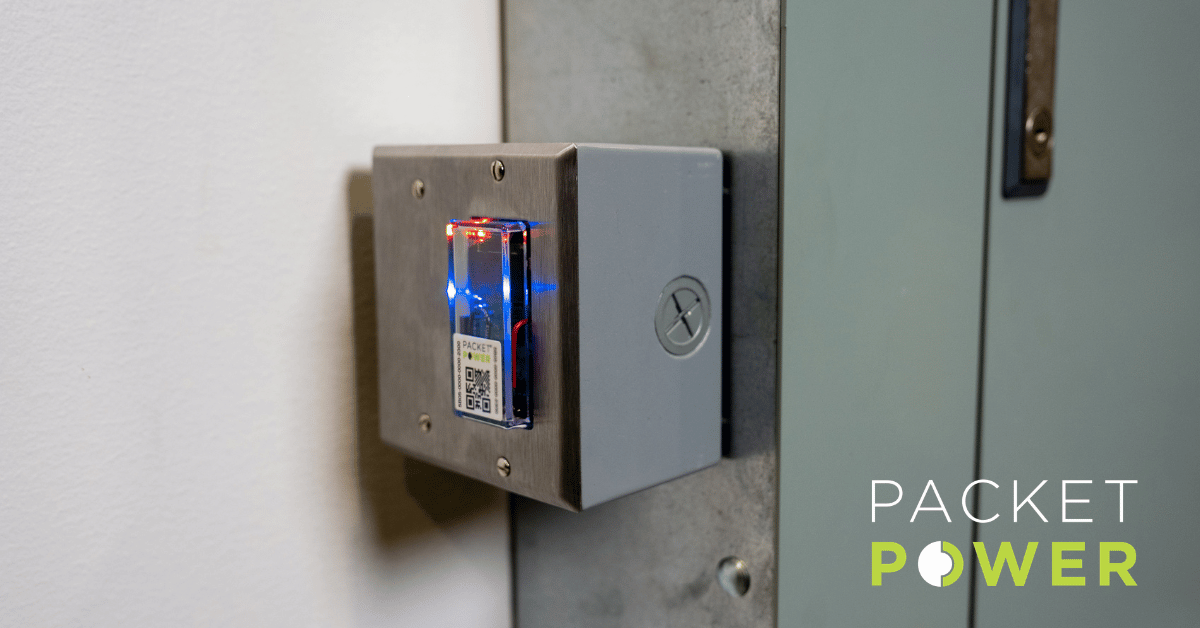
Small form factor monitors solve the space problem by going where the power is, not the other way around. Compact sensors can attach directly to cables, busbars, or inside existing electrical panels without needing extra enclosures or dedicated rack units.
This is especially valuable for retrofits. Many older facilities have areas where traditional monitoring was never installed because there simply was not room for it. A small form factor approach lets you instrument those spots without reworking your layout or giving up usable space.
New builds benefit as well. When your monitoring hardware is compact enough to design into the infrastructure from day one, you are not carving out space that could go to IT equipment later. Because smaller devices are faster to install and easier to reposition, your monitoring can adapt as your facility evolves rather than becoming a fixed constraint.
Why Compact Power Monitors Deliver More Granular Data
One pattern we see consistently is that when monitors are small and easy to deploy, operators deploy more of them. More monitoring points mean better data. Instead of only measuring at the PDU or panel level, compact devices make it realistic and easy to monitor individual circuits, branch panels, and specific equipment groups.
That granularity is what helps you catch a single overloaded phase, spot an underutilized circuit with room for more load, or track down the source of an unexpected spike. Those are decisions you simply cannot make from high-level metering alone.
How Wireless Connectivity Reduces the Monitoring Footprint Even Further
One of the things that kept legacy monitoring hardware large was all the wiring behind it. Cable trays, conduit runs, and network switches dedicated to monitoring traffic all add up to a significant footprint on top of the monitors themselves. Small form factor monitors already address the physical size problem, but when your monitoring devices communicate wirelessly, most of that supporting infrastructure goes away, too.
The hardware footprint shrinks even further, and you can place monitors in locations where running cable would have been impractical or too expensive to justify. Combined with a compact physical design, wireless connectivity turns monitoring installation from a capital project into a routine operational task.
That said, wireless is not the only path to a minimal footprint. Thanks to recent innovations, wired solutions now deliver record-breaking capacity in remarkably small form factors, giving you the same space-saving benefits with a hardwired connection where your infrastructure requires it.
The Future of Small Form Factor Power Monitoring
The push toward small form factor monitoring is not slowing down. As rack densities climb and power demands increase, operators need more visibility without sacrificing valuable space.
Facilities that move to compact, flexible monitoring now are building a foundation that simply scales with them instead of holding them back. If you are ready to see what small form factor monitoring can do in your facility, our team can walk you through the options. Reach out to the Packet Power team, and we will help you find the right fit.




 Packet Power Team
 Packet Power Team : July 2026
![Using Temperature Sensor Data to Drive Business Decisions [VIDEO]](https://www.packetpower.com/hubfs/Blog/using%20temp%20sensors.jpg)
.png)