Cooling is essential to keeping critical equipment safe. However, in many data centers and server rooms, the pursuit of safety has tipped into excess. Facilities run colder than necessary, consuming energy that delivers no additional protection.
Overcooling is one of the most common and overlooked sources of energy waste in critical environments. The good news is that it is also one of the most correctable once you have the visibility to address it.
The Hidden Cost of Overcooling
Cooling can account for 30 to 40 percent of a data center’s total energy consumption. When systems run colder than required, that percentage climbs without any benefit to equipment reliability.
The financial impact compounds quickly. A facility operating even a few degrees below optimal range around the clock, every day of the year, accumulates high unnecessary costs. Multiply that across several rooms or sites, and the drain on energy budgets becomes substantial.
Yet overcooling often goes unnoticed because the immediate risk feels low. Cold is safe; Hot is dangerous. So facilities err on the side of caution and rarely revisit those assumptions.
Why Overcooling Happens
Overcooling is rarely intentional. It typically results from a combination of factors.
- Fear of hotspots: Equipment failures caused by overheating are visible and costly. The natural response is to keep temperatures well below thresholds to create a buffer. Over time, that buffer becomes the default.
- Lack of granular data: Many facilities rely on a limited number of sensors or average temperature readings that mask what is actually happening at the rack level. Without visibility into localized conditions, operators keep everything cold to cover the unknown.
- Set-it-and-forget-it schedules: Cooling setpoints configured during initial commissioning often remain unchanged for years — even as equipment loads, layouts, and external conditions shift.
- Uneven airflow: Poor containment or airflow obstructions create cold zones in some areas, while others run warmer. Rather than address the imbalance, facilities lower overall temperatures to compensate.
Signs Your Facility May Be Overcooling
A few indicators suggest overcooling may be an issue.
- Temperatures consistently well below ASHRAE's recommended range of 18°C to 27°C (64°F to 81°F)
- Cooling systems running at high capacity even during low-load periods
- Cold aisles that feel noticeably colder than necessary
- Minimal difference between inlet and exhaust temperatures at racks
Any of these patterns is worth investigating. Together, they point to energy being spent without purpose.
How to Reduce Overcooling Without Risking Equipment
The goal is not to eliminate safety margins. It is to right-size them based on actual conditions rather than assumptions.
- Establish visibility first. Before adjusting setpoints, you need to understand what is happening across the facility. Real-time temperature monitoring at the rack level reveals where conditions are genuinely tight and where there is room to optimize.
- Raise setpoints gradually. Small, incremental adjustments allow you to capture savings while monitoring the impact closely. A one-degree change sustained over time adds up without introducing risk.
- Use differential temperature data. Comparing inlet and exhaust temperatures shows how effectively cooling is being used. Large differentials suggest airflow may need attention. Small differentials in cold areas confirm overcooling.
- Implement alerting. Confidence to raise setpoints comes from knowing you will be notified immediately if conditions drift. Real-time alerts create a safety net that supports optimization.
How Packet Power Helps Facilities Eliminate Overcooling
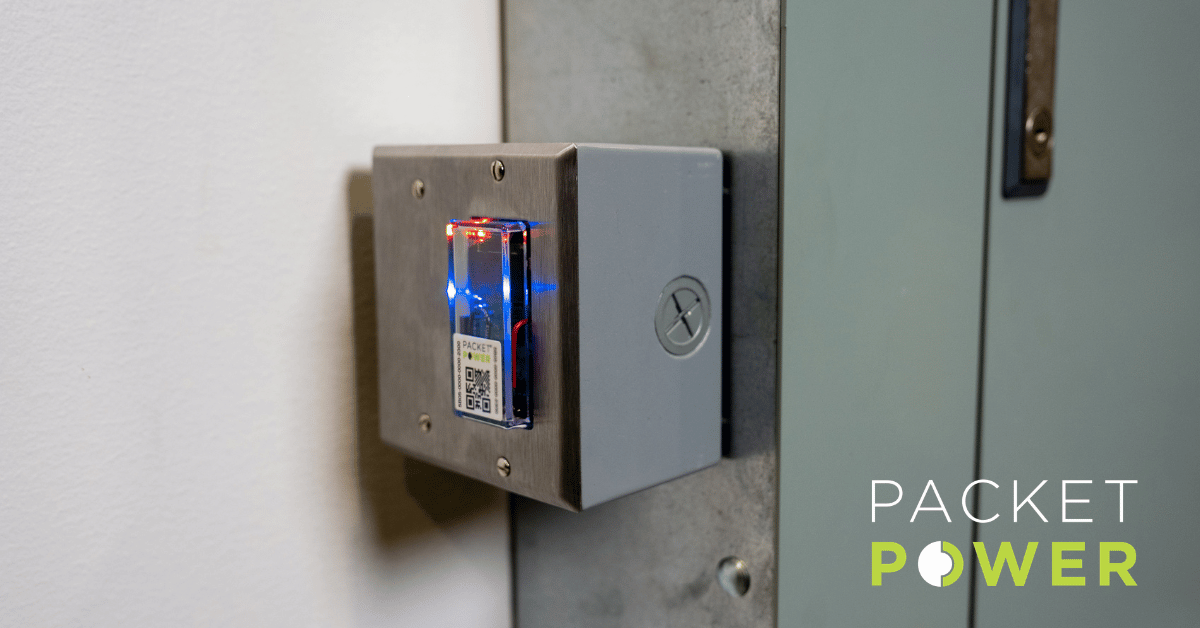
Packet Power wireless environmental sensors give facilities teams the granular visibility needed to optimize cooling with confidence. Temperature sensors deploy in minutes without infrastructure changes, providing real-time data at the rack, row, or room level.
With monitoring in place, you can identify overcooled zones, adjust setpoints safely, and verify results immediately. Alerts notify you the moment conditions change, so you can operate closer to optimal ranges without risking equipment.
Our sensors integrate with existing BMS or DCIM platforms, scaling easily from a single server room to multiple facilities. Ready to find out if your facility is overcooling?
 Packet Power Team
 Packet Power Team : December 2022