Modern data centers are running out of two things at the same time: power and the physical space to measure it. As AI workloads, high-density racks, and edge deployments drive electrical infrastructure to its limits, facility teams need far more granular data than legacy meters were ever designed to deliver.
They also need that data without sacrificing valuable rack units, panel space, or electrical room square footage. That is why small form factor power monitors have become one of the fastest-evolving categories in data center infrastructure.
Why Small Form Factor Power Monitoring Matters Now
Traditional branch circuit monitoring hardware is bulky, and a panelboard retrofit often means pulling electricians, running conduit, allocating switch ports, and carving out enclosure space that simply does not exist in a live colocation or edge site.
Meanwhile, the data appetite keeps growing. Operators now need real-time visibility into voltage, current, kW, kWh, power factor, and phase balance at the circuit level rather than only at the PDU. That level of granularity is what supports PUE reporting, sustainability goals, capacity planning, and tenant billing.
A small form factor power monitor resolves this tension. By shrinking the footprint of the metering hardware itself, facility teams can add hundreds of measurement points without touching the physical envelope of the facility. The result is more data, less space, and faster deployment.
What Defines a Small Form Factor Power Monitor
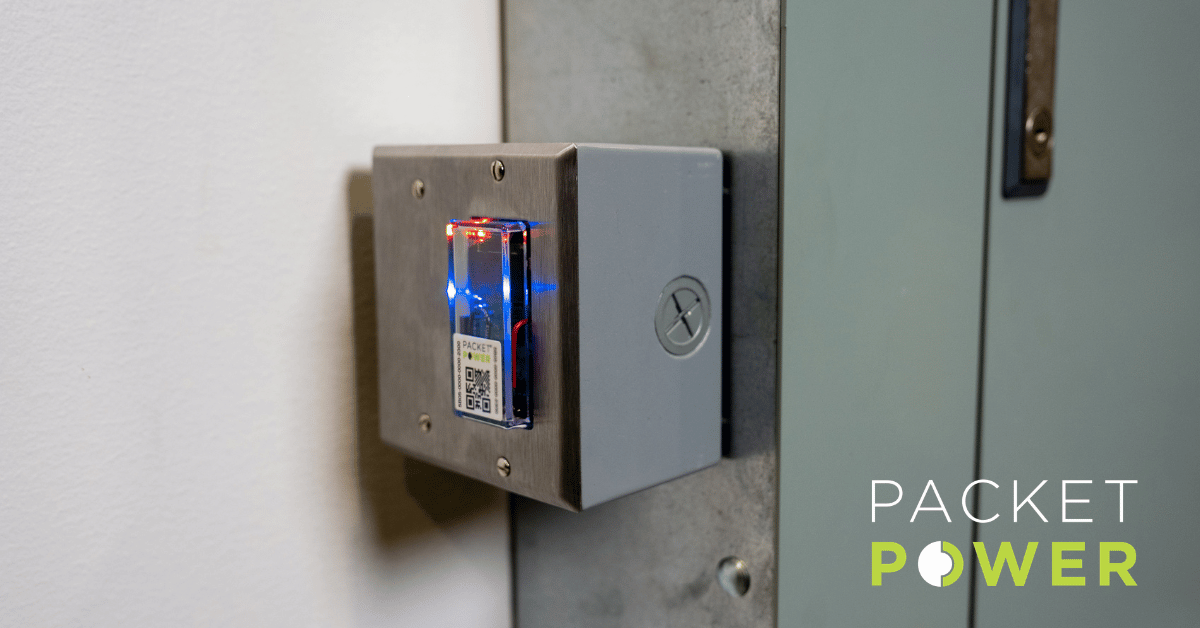
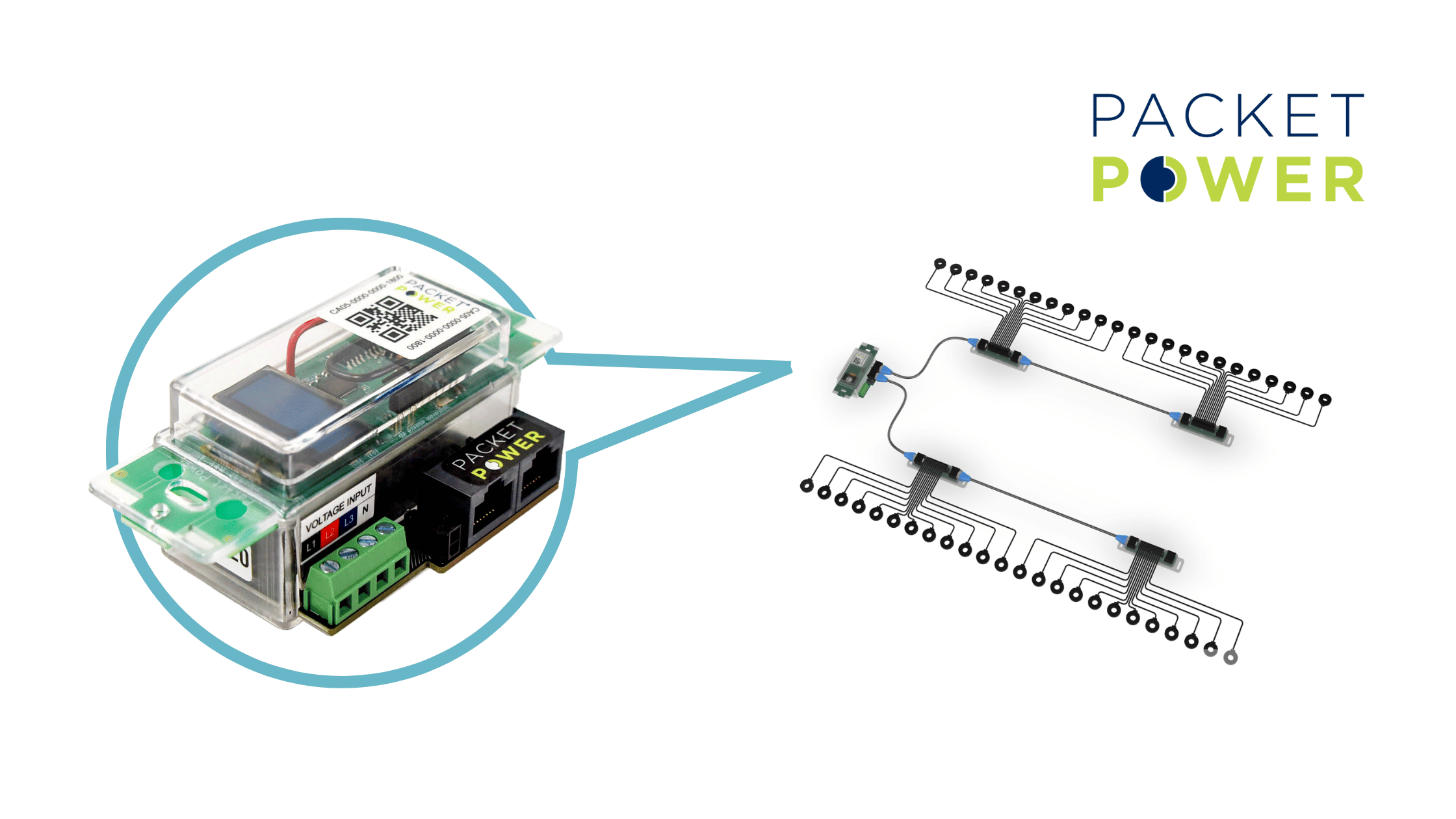
Not every compact meter qualifies as a true small form factor power monitor. Several characteristics need to come together. The enclosure must be ultra-compact, small enough to fit inside a gangbox, behind a panel door, or directly on a busway without added clearance, while circuit density should be high enough to track dozens or even more than a hundred circuits from a single node.
Current sensors need to be modular, typically Rogowski coils or split-core CTs that clamp around existing conductors without de-energizing the panel. Connectivity should be flexible, offering both wireless and wired options so installation does not depend on running new network drops, and output must be open, using protocols such as Modbus, SNMP, BACnet, or MQTT to feed any DCIM, BMS, or cloud platform. Together, these traits shift power monitoring from a construction-class project into a simple plug-and-play retrofit.
Benefits for Data Centers, Colocation, and Edge Sites
Compact hardware unlocks use cases that were previously impractical, and the benefits stack up quickly across both technical and commercial dimensions.
- Seamless panel retrofits. Branch circuit monitoring can be added to existing panels without swapping panelboards.
- Tenant-level submetering. Colocation operators gain accurate, per-tenant energy cost allocation without carving out new equipment space.
- Edge and remote site visibility. Even locations with no room for traditional metering cabinets become fully instrumented.
- Support for AI and high-density racks. Per-circuit telemetry enables load balancing, capacity planning, and hot-spot prevention where power density is highest.
- Faster, lower-cost deployment. Reduced installation labor, shorter downtime windows, and lower CapEx per monitored point shorten the payback period considerably.
For operators chasing sustainability targets or preparing for regulatory reporting, the ability to meter deeper into the power chain without a physical overhaul becomes a genuine competitive advantage.
The Future Is Smaller, Smarter, and Faster to Deploy
The direction of travel is clear. As power demand climbs and floor space stays fixed, small form factor power monitors will keep shrinking, while their channel counts, communication options, and built-in intelligence continue to expand. For data center and critical facility teams, the question is no longer whether to adopt them, but how quickly they can be deployed.
This is exactly the problem Packet Power set out to solve with its high-density power monitoring solutions, delivering up to 120 circuits of real-time data from a footprint that easily fits inside a gangbox. If you are exploring how to add deeper power monitoring without expanding your physical footprint, it is worth taking a closer look at what Packet Power offers.
 Packet Power Team
 Packet Power Team : November 2025




.png)